


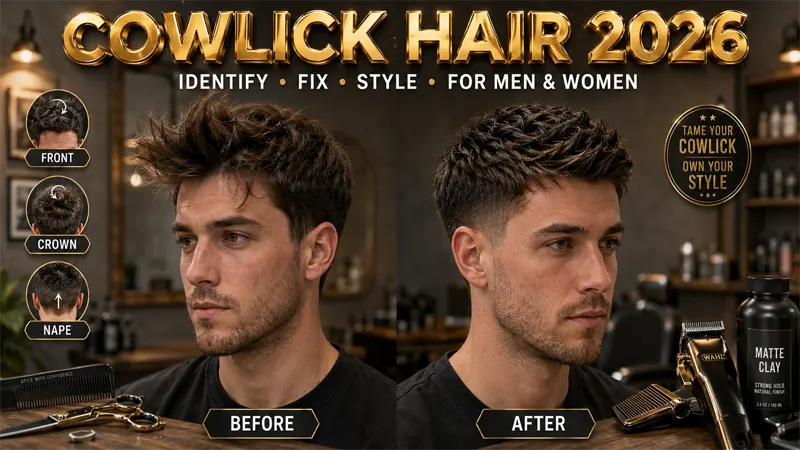

Quick answer: A cowlick is a section of hair that grows in a different direction than the surrounding hair, creating a swirl, lift, or stubborn flip. Cowlicks are genetic and permanent — you can't get rid of them, but you can hide or work with them. The best approach depends on where your cowlick sits: front cowlicks work with textured crops, quiffs, or side parts. Crown cowlicks need either very short fades or enough length for weight. Nape cowlicks usually disappear with a clean taper. The cut matters more than products — and fighting your cowlick almost always makes it worse than working with it.
What Is a Cowlick?
A cowlick is a section of hair that grows in a different direction from the hair around it. While most of your hair follows a uniform growth pattern, a cowlick rebels — creating a visible swirl, lift, tuft, or flip that resists combing and styling. The name comes from the 16th century (coined by Dr. Richard Haydocke) because the swirl pattern looks similar to where a mother cow has licked her calf's head against the grain.
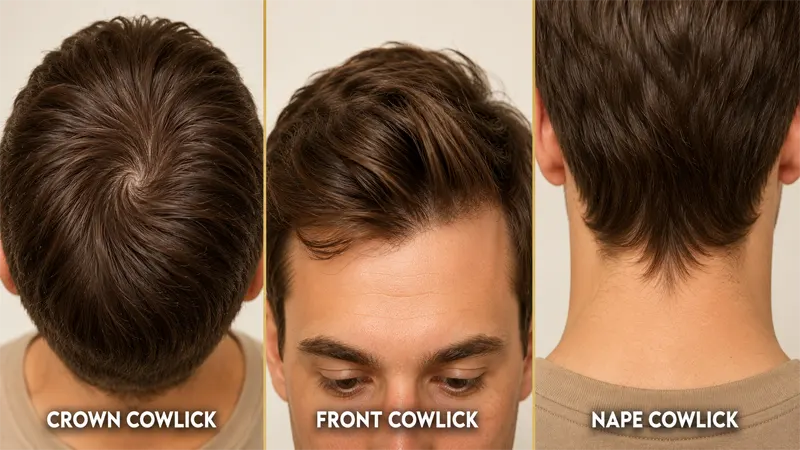
Cowlicks happen because of the way hair follicles are positioned under your scalp. At a cowlick, the follicles tilt at a different angle, causing hair to emerge at an unusual slope. About 84% of people have a clockwise hair whorl at the crown, while the remaining 16% have counterclockwise. Some people have one cowlick. Some have two or three. Some are barely noticeable; others are extremely stubborn.
Here's the most important thing to understand: everyone has cowlicks. They're just more visible on people with shorter hair, finer textures, or hair that's been cut at the wrong length for the growth pattern. Cowlicks are not a flaw — they're how human hair grows.
The 3 Common Cowlick Locations
Cowlicks appear in three main areas. Knowing yours determines everything about how to manage it:
1. Front / Hairline Cowlick
Sits right above the forehead. Causes hair to push up, sideways, or split unnaturally. The most visible and frustrating location — it interferes with bangs, fringe styles, and any look that requires hair to lie flat at the front.
2. Crown Cowlick
Sits at the highest point of the scalp. Creates a noticeable swirl or spiky pattern that can look like a small bald patch. Especially visible on short haircuts and thinning hair.
3. Nape / Back Cowlick
Appears at the back of the neck where the hairline ends. Causes hair to flip outward or stick up. Less visible day-to-day but interferes with short clean cuts and updos.
The Cowlick Self-Test — Find Your Pattern
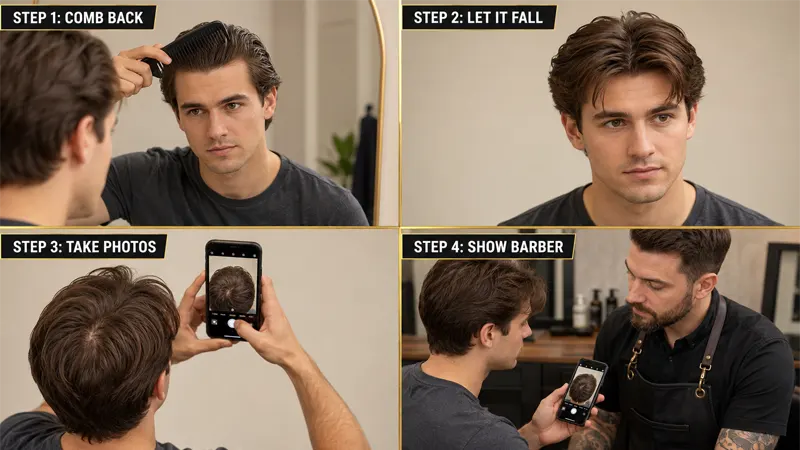
Before any haircut or styling decision, identify exactly where your cowlick sits and which direction it grows. Do this once and you'll know your hair forever:
- Wash your hair and let it air-dry partially. Don't apply any product. You want to see how your hair behaves naturally.
- Comb all your hair straight back from the forehead. Use a wide-tooth comb, no force.
- Watch what happens. Wherever the hair splits, swirls, or refuses to stay back — that's your cowlick zone.
- Repeat with hair combed forward. Some cowlicks only reveal themselves in one direction.
- Take three photos: from the front, side, and top-down looking at the crown. Save these to your phone.
- Note the direction. Does your cowlick push hair UP, FORWARD, BACKWARD, or to a SIDE? This determines which hairstyles will work.
- Show your photos to your barber. Wet hair hides cowlicks — your dry photos give them the real picture.
Best Cowlick Hairstyles for Men
The right haircut works WITH your cowlick instead of fighting it. The wrong haircut highlights it. Match your style to your cowlick location:
If Your Cowlick Is at the FRONT / Hairline
Textured Crop
Short layered hair on top with light fringe forward. The choppy texture makes the cowlick's irregular direction look intentional.
Quiff
Uses the cowlick's natural lift. Blow-dry up and back, set with matte clay. Clean sides emphasize the deliberate height.
Side Part with Tapered Sides
Part where the hair naturally splits — don't force it to the wrong side. Combine with a low taper for polish.
Curtain Bangs
Middle-parted bangs falling on either side. Turns the cowlick's split INTO the shape rather than hiding it.
Swept-Back Style
Length on top (4–6 inches) provides weight while the cowlick adds front volume. Pair with a blowout taper for clean sides.
Slick Back
For severe front cowlicks, slick everything straight back with strong pomade. The pomade weight overpowers most cowlicks.
If Your Cowlick Is at the CROWN
Buzz Cut or Crew Cut
Very short hair removes the cowlick problem entirely. Without length to stick up, the swirl pattern becomes invisible.
Medium-Length Layers
Grow the top 3–4 inches with internal layering. The added weight from longer hair drags the cowlick down.
Modern Mullet Fade
Longer back length pulls the cowlick down with weight. The fade keeps sides clean.
Undercut with Long Top
Sides shaved, top kept long enough to style forward or sideways — covering the crown swirl entirely.
If Your Cowlick Is at the NAPE / Back
Clean Low Taper
Tapering the back hair short enough eliminates length for the cowlick to flip. Easiest fix for nape cowlicks.
Lineup with Sharp Neckline
Pair with any cut. Clean razor neckline draws the eye away from any nape cowlick irregularity.
Best Cowlick Hairstyles for Women
Women generally have an easier time hiding cowlicks because longer hair adds weight. But cowlicks still cause frustration with bangs, parts, and updos. Here's what works:
If Your Cowlick Is at the FRONT / Hairline
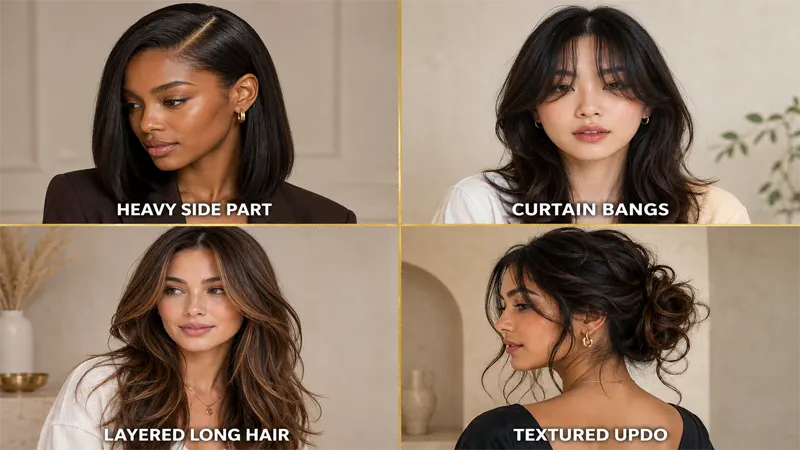
- Heavy off-center part. Don't force a center part if your cowlick splits to one side. Move the part where the hair naturally wants to open.
- Curtain bangs. Middle-parted fringe falling to both sides — turns the split into the style.
- Swept-back styles. Length and weight (shoulder-length or longer) drags front cowlicks down.
- Front-section braids. French braid or twist the front section to control the cowlick zone. See our braiding guide for techniques.
- Bangs with texture, not blunt. Wispy or piecey bangs hide cowlick direction. Blunt bangs expose every irregularity.
If Your Cowlick Is at the CROWN
- Layers, layers, layers. Internal layering adds movement that disguises swirls and creates visual coverage.
- Volumizing techniques. Tease at the roots to lift hair OVER the cowlick rather than fighting flat against it.
- Avoid tight slick-back ponytails. They expose every crown irregularity. Use loose textured updos instead.
- Slightly longer length on top. 6+ inches of hair on the crown provides enough weight to mask the swirl.
If Your Cowlick Is at the NAPE
- Avoid super short bobs at the nape. They highlight the cowlick. Either grow it out or layer the nape area.
- Loose updos. Wispy buns and effortless updos hide nape cowlicks. Sleek high ponytails expose them.
- Hair extensions or clip-ins. Adding length at the nape covers most cowlicks completely.
Cowlicks in Babies, Kids & Teens
Parents often worry when they notice a cowlick on their baby or toddler. Here's what to know:
For babies and young children:
- Don't try to "fix" it. No products on baby hair. Their hair will change dramatically by age 3–5.
- Let it air-dry in the direction you want. A gentle smoothing motion after bath time helps establish the lay over weeks.
- Avoid forcing parts. Children's hair changes constantly. What looks unruly at age 2 may lay flat at age 5.
For older kids and teens (especially boys with short hair):
- Bring photos to the barber and discuss cowlick location BEFORE the cut.
- Avoid super-short cuts (below 1 inch on top) on kids with prominent crown cowlicks.
- A small amount of light styling cream works for school-age kids without weighing down their hair.
- For boys, consider the braided styles guide if hair length supports it — braids eliminate cowlick visibility entirely.
Talk to Your Barber — Exact Scripts
The single biggest difference between a great cowlick cut and a bad one is communication. Your barber can't fix a cowlick they don't know about. Use these scripts:
At the Start of Your Appointment
"Before we start, I want to point out that I have a cowlick at [front/crown/nape]. It pushes my hair [up/forward/sideways] in [direction]. Here are some photos of how it looks when my hair is dry [show your saved photos]. Can we choose a cut that works with this pattern instead of against it?"
For a Front Cowlick
"My front cowlick pushes hair up. I'd like a textured crop or quiff style that uses the natural lift. Please leave enough length on top so the cowlick adds intentional volume rather than looking unkempt. Texturize through the top — no blunt cuts."
For a Crown Cowlick
"I have a stubborn crown cowlick that creates a swirl. I'd like either a very short cut where the cowlick won't show, or enough length on top (at least 3 inches) so I can use weight to control it. Don't cut the crown area blunt — use layering."
For a Nape Cowlick
"My nape cowlick flips out at the back. Please give me a clean low taper through the back that keeps the hair short enough that the cowlick won't have length to stick out. A sharp neckline lineup helps too."
Styling Techniques That Actually Work
The cut matters most, but the right styling locks in the look. Follow these techniques:
- Start with damp hair, not soaking wet. Towel-dry until hair stops dripping. Wet hair won't take direction; dry hair won't reshape.
- Apply heat protectant. You'll be using a blow-dryer to retrain the hair. Heat protectant prevents long-term damage.
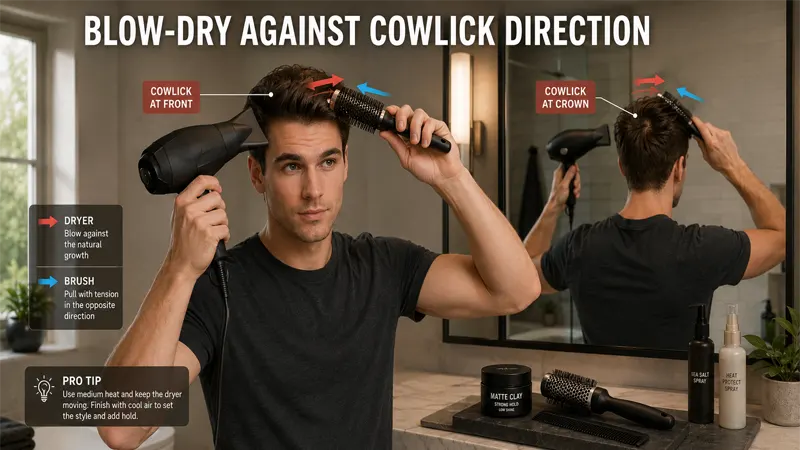
- Blow-dry AGAINST the cowlick's growth direction. If your cowlick pushes hair right, dry it pushing left. Use a round brush for tension. The combination of heat + tension + opposite direction temporarily retrains the hair.
- Use a flat concentrator nozzle. Focused airflow gives you control over which sections you're reshaping. Open-flow dryers spread heat too widely.
- Set with cool air. The last 20–30 seconds in cool mode locks the hair in its new position. Skip this step and your cowlick reappears within hours.
- Apply product at the right moment. Pomade, wax, or matte clay goes on AFTER the blow-dry while hair is still slightly warm. Apply too early and it dilutes.
- Press, don't comb. Use fingers to press product into the cowlick area. Combing through redistributes hair in directions you don't want.
Best Products for Cowlicks (by Hair Type)
| Hair Type | Best Product Type | Why It Works |
|---|---|---|
| Fine straight hair | Volumizing mousse + light matte clay | Lift first, then hold without weight |
| Thick straight hair | Strong-hold pomade or wax | Weight overpowers cowlick lift |
| Wavy hair | Sea salt spray + texture paste | Adds texture that disguises swirl direction |
| Curly hair | Curl cream + light hold gel | Defines curls in unified direction |
| Coily hair | Leave-in conditioner + light styling cream | Moisture lays cowlicks down naturally |
| Thinning hair | Volumizing spray + matte powder | Adds the appearance of fullness while controlling lift |
10 Common Cowlick Mistakes
❌ Trying to comb the cowlick "back into place"
Fix: You can't comb a cowlick into submission. You need to either work with its direction or use heat + tension to retrain it temporarily.
❌ Cutting hair too short without considering the cowlick
Fix: Either go very short (under 1 inch — cowlick can't stand up) or leave enough length for weight (3+ inches). The in-between length is where cowlicks dominate.
❌ Forcing a side part on the wrong side
Fix: Wet your hair, push it back, watch where it naturally splits. That's your part line. Forcing the other side is futile.
❌ Daily shampooing
Fix: Shampoo strips natural oils that weigh hair down. Wash every 2-3 days instead. Drier hair = more visible cowlicks.
❌ Blow-drying in the same direction as growth
Fix: Always dry AGAINST the cowlick direction for control. With-direction drying reinforces the cowlick.
❌ Applying product to dry hair
Fix: Styling happens during the wet-to-dry transition. Once hair is dry, you can only adjust within the dried shape.
❌ Using too much product
Fix: Over-application makes cowlicks crusty and obvious. Start with a pea-sized amount, add more only if needed.
❌ Not telling your barber about the cowlick
Fix: Always mention it upfront. Show photos taken on dry hair. A good barber will design the cut around the pattern.
❌ Believing you need to "get rid of it"
Fix: You can't. It's genetic and permanent. The goal is working WITH it, not eliminating it. Many cowlicks become attractive features once styled properly.
❌ Skipping the cool-air step
Fix: Cool air sets the shape. Without it, cowlicks return within hours as the hair returns to its memory shape.
Cowlick Decision Flow — What Should You Do?
🧭 Quick Decision Framework
→ Front: Continue with front cowlick options above
→ Crown: Continue with crown cowlick options
→ Nape: Easiest fix — go with a clean taper
→ Less than 5 minutes: Choose a very short cut (buzz, crew, French crop)
→ 5–10 minutes: Choose a textured medium cut with blow-dry technique
→ 10+ minutes: Any style works with proper technique
→ Yes: Length provides weight that controls cowlicks naturally
→ No: Go very short — the in-between length is the worst for cowlicks
→ Yes: Communicate clearly using the scripts above
→ No: Find one with experience handling cowlicks (check their Instagram for examples)
Can Cowlicks Be Permanently Fixed?
This is the #1 search around cowlicks, and the honest answer is: no, you can't permanently fix a cowlick. Here's why:
- Cowlicks are caused by follicle angle. The follicles under your scalp are positioned at an angle that determines hair direction. You can't change the angle of follicles.
- Genetic origin. Cowlicks come from inherited follicle patterns. Even hair transplants would just relocate hair, not change growth direction at existing follicles.
- Chemical treatments don't work. Relaxers, perms, and keratin treatments change hair texture but not follicle angle. The cowlick comes back as soon as the treatment grows out.
- Lasers and surgical options. No proven cosmetic procedure exists to "remove" a cowlick. Some hair restoration specialists offer follicle redirection for severe cases, but results are mixed.
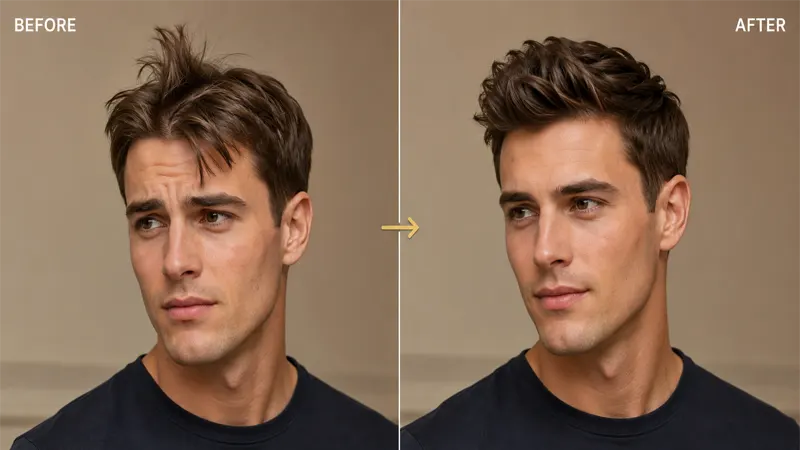
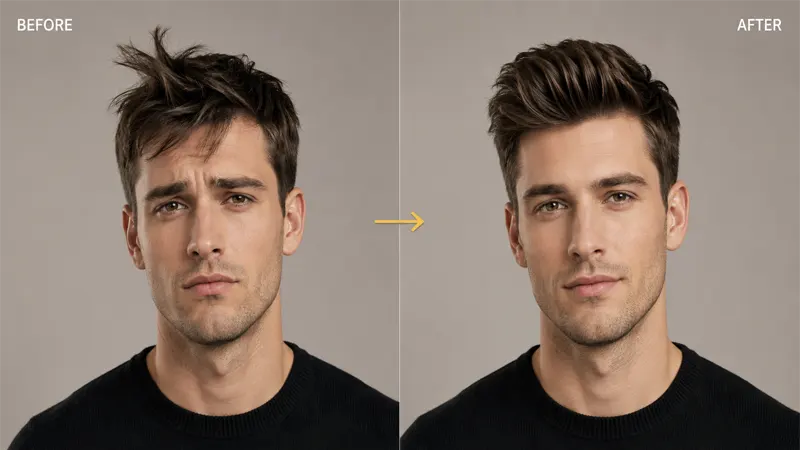
The good news: you don't need to eliminate the cowlick — you need to work with it. Celebrities like Zac Efron, Chris Hemsworth, Tom Hardy, and Leonardo DiCaprio all have prominent cowlicks. Their styles work because they embrace the pattern, not fight it.
Pro Tips From Stylists
- Blowout Taper Haircut Guide — great for hiding crown cowlicks
- Modern Mullet Fade Guide — length-based cowlick control
- Line Up Haircut Guide — sharp neckline to hide nape cowlicks
- Korean Perm for Men — chemical texture change to mask cowlicks
- Dark Brown Hair with Highlights — color tricks to distract from cowlicks
- Braids for Boys Guide — kid-friendly braided styles for cowlick coverage
Cowlick Hair — Frequently Asked Questions
Can a cowlick be permanently removed?
No. Cowlicks are caused by the angle of hair follicles under your scalp — a genetic trait you can't change. No haircut, product, or chemical treatment permanently removes a cowlick. The goal is to choose styles that work WITH your cowlick's natural direction, not against it. Even hair transplants and surgical options have limited success.
Why do cowlicks happen?
Cowlicks are caused by hair follicles that grow at an angle different from the surrounding hair. About 84% of people have a clockwise crown whorl; 16% have counterclockwise. The pattern is determined at birth and inherited from your parents. Everyone has at least one cowlick — they're just more visible on some hair types.
Do cowlicks get worse with age?
Cowlicks themselves don't worsen, but they can BECOME MORE NOTICEABLE as hair thins. Reduced hair density means less surrounding hair to disguise the cowlick swirl. This is particularly common in men experiencing male pattern hair loss at the crown.
Are cowlicks a sign of hair loss?
No. Cowlicks are present from birth and are a normal hair growth pattern. However, if you notice your cowlick becoming significantly more visible over months, accompanied by other thinning signs, that may indicate early hair loss — consult a dermatologist or trichologist for evaluation.
What's the easiest hairstyle for someone with a cowlick?
For men: a short buzz cut or crew cut eliminates most cowlick visibility. For women: medium-length hair (shoulder length or longer) with internal layering. Long hair provides weight that drags the cowlick down. The "easiest" depends on your willingness to commit to either extreme — very short or longer.
Can I hide my cowlick with hair products alone?
Products can help control a cowlick temporarily but can't override the underlying follicle direction. The cut matters more than the product. A bad haircut for your cowlick can't be saved with product. A good haircut for your cowlick may not need much product at all.
Should I tell my child to be embarrassed about their cowlick?
Absolutely not. Cowlicks are normal, common, and often charming. Many celebrities have prominent cowlicks (Zac Efron, Tom Hardy, Chris Hemsworth). Teaching children to embrace their natural hair pattern builds confidence. The cowlick will become less prominent or be easier to work with as their hair grows and texture develops with age.
What's the best product for taming cowlicks?
For most hair types, a strong-hold matte pomade or styling clay works best. Brands like Imperial Barber Products, Layrite, and Hanz de Fuko offer effective options. Apply to damp hair after blow-drying against the cowlick direction. Avoid shiny pomades or gels that highlight cowlick lines.
Can a perm fix a cowlick?
A perm changes hair texture, which can disguise a cowlick by making the surrounding hair similarly curled — but it doesn't eliminate the underlying follicle direction. Once the perm grows out, the cowlick remains. Korean perms for men can help by adding texture that masks cowlick swirl patterns. Best for crown cowlicks specifically.
Why does my cowlick disappear when my hair is wet?
Water adds weight that temporarily forces hair to lie flat regardless of follicle direction. As hair dries, the natural pattern reasserts itself. This is why you should always identify your cowlick on PARTIALLY DRY hair, not wet hair — and why showing dry-hair photos to your barber is important.
This guide reflects current hair styling practices and dermatological understanding of hair growth patterns. If your cowlick is suddenly more visible due to thinning hair, consult a dermatologist or trichologist. For severe cases, professional barbers and stylists offer the best personalized solutions.
