
Introduction: The Electric Revolution Hits Full Speed
The electric vehicle landscape has transformed dramatically, and 2026 marks a pivotal year where EVs are no longer a niche curiosity but a mainstream reality. With dozens of new models hitting the market, battery technology leaping forward, and prices finally becoming accessible to everyday buyers, there has never been a better time to explore what the newest electric cars have to offer.
Whether you are a first-time EV buyer looking for an affordable daily driver, a tech enthusiast chasing cutting-edge features, or a family in need of space and long-range capability, this comprehensive guide covers every angle. We compare the latest models across every segment, break down real-world range versus manufacturer claims, explore charging infrastructure improvements, and help you make an informed decision.
This guide goes beyond simple listicles by addressing the content gaps most EV guides miss: real ownership costs over five years, practical charging advice for apartment dwellers, cold-weather performance data, and a buyer decision framework tailored to your actual driving habits.
The 2026 EV Market at a Glance
The global electric vehicle market has entered a new era of maturity. Automakers from every continent are launching competitive models, battery costs have continued to fall, and charging networks have expanded to the point where range anxiety is fading into history for most drivers. Here is what defines the 2026 EV landscape.
Key Market Trends Shaping 2026
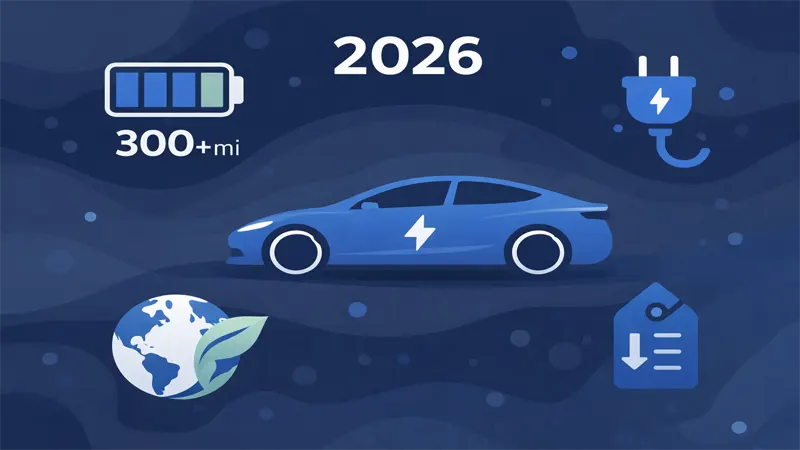
Several major shifts are defining this year’s electric car market. Battery technology has advanced to the point where most new EVs offer 300 miles or more on a single charge, with premium models pushing past 400 miles. The introduction of 800-volt electrical architecture by multiple manufacturers has slashed fast-charging times, with some models now capable of adding 200 miles of range in just 15 to 20 minutes.
Perhaps most importantly for consumers, the price gap between electric and traditional vehicles continues to narrow. Multiple manufacturers have announced models under $30,000, and the used EV market has matured enough to offer genuine bargains. Government incentives in many regions continue to sweeten the deal, with tax credits, rebates, and reduced registration fees available to qualifying buyers.
The competitive landscape has also intensified, with established automakers finally taking EVs seriously alongside dedicated EV manufacturers. This competition is driving innovation in areas like software-defined vehicles, over-the-air updates, vehicle-to-home power capabilities, and autonomous driving features.
Best Affordable Electric Cars Under $35,000
One of the most exciting developments in 2026 is the expansion of truly affordable electric vehicles. Gone are the days when going electric meant paying a premium. Here are the standout models that prove electric driving can be budget-friendly without sacrificing quality.
Chevrolet Bolt (2027 Model Year)
The return of the Bolt is one of the biggest stories of the year. Starting under $30,000, it reclaims its title as the most affordable EV in America. Built on an updated platform, the new Bolt offers 255 miles of range, 210 horsepower, and 150-kW fast-charging capability. While it does not boast the longest range in its class, its combination of price, practicality, and a spacious interior makes it an outstanding value proposition for daily commuters.
Nissan Leaf (Third Generation)
After more than a decade and half a million units sold worldwide, the Nissan Leaf has been completely redesigned for 2026. Built on a modern platform shared with the Ariya, the new Leaf offers a substantial range improvement with up to 310 miles per charge. Starting around $30,000 in the US and approximately £32,000 in the UK, it represents a solid middle-ground option. The new design is sharper and more contemporary, though some reviewers note the driving experience could be more engaging.
Renault 5 E-Tech
This retro-styled city car has taken Europe by storm with its charming design and accessible price point starting around £21,500. With a 44 kWh battery delivering approximately 199 miles of range, it is perfectly suited for urban commuting and short trips. The Renault 5 won multiple Car of the Year awards in 2025, and its appeal lies in the combination of distinctive styling, nimble handling, and genuine affordability that makes electric driving accessible to a much wider audience.
Fiat Grande Panda
Starting at roughly £21,000, the Fiat Grande Panda is one of the most affordable EVs available in Europe. Its blocky, retro-inspired design pays homage to the original Panda from 1980, while its modern electric powertrain and practical interior make it a genuine contender for value-conscious buyers. It may not offer the longest range, but for city driving and short commutes, it delivers everything most drivers actually need.
Best Mid-Range Electric Cars ($35,000 – $60,000)
The mid-range segment is where the EV market truly shines in 2026. These vehicles offer the best balance of range, features, technology, and value, making them the sweet spot for most buyers.
Tesla Model Y Long Range
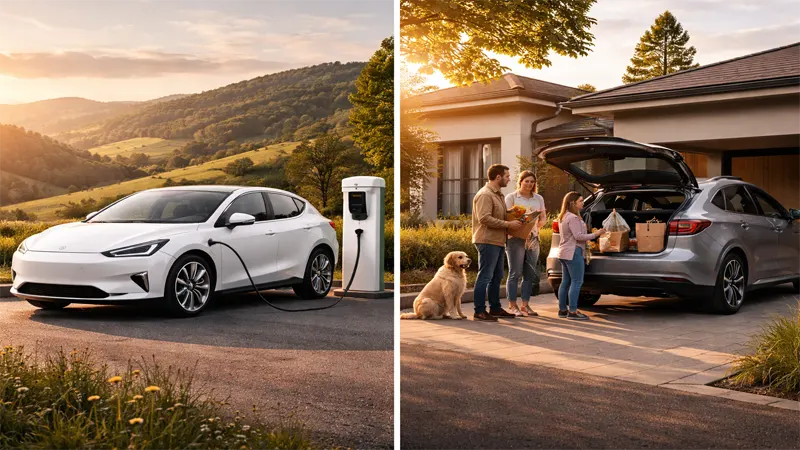
The refreshed Tesla Model Y continues to be one of the best-selling EVs globally, and for good reason. With over 327 miles of real-world range, a spacious interior with versatile cargo space, and access to the extensive Supercharger network, it remains the benchmark against which other electric SUVs are measured. The 2026 update brings improved ride comfort, a refined interior, and enhanced driver-assistance features. Prices start around $44,990.
Hyundai Ioniq 5
The Ioniq 5 is a perennial favourite among EV enthusiasts and mainstream buyers alike. Its 800-volt architecture enables some of the fastest charging speeds in its class, capable of going from 10 to 80 percent in approximately 18 minutes at a compatible charger. With up to 282 miles of real-world range, a unique retro-futuristic design, and practical features like vehicle-to-load capability, the Ioniq 5 starting around $35,000 represents exceptional value.
Kia EV6
Sharing its platform with the Ioniq 5, the Kia EV6 prioritises driving enjoyment with sharp steering and well-balanced handling. It offers similar fast-charging capability and range, but wraps it in a sportier, more aggressive design. The EV6 has consistently earned praise from automotive journalists for being one of the most engaging EVs to drive, making it an excellent choice for buyers who value the driving experience.
Skoda Elroq
Named 2025 Car of the Year by multiple European publications, the Skoda Elroq has quickly become the benchmark for electric family SUVs in Europe. Starting at £32,000, it offers impressive space, solid build quality, and the practical sensibility that has defined Skoda for decades. Its range and efficiency are competitive with rivals costing significantly more, making it a standout in the value equation.
BMW iX3 (Neue Klasse)
The iX3 represents a fresh start for BMW electric vehicles, riding on the brand-new Neue Klasse platform designed exclusively for EVs. With 800-volt architecture enabling rapid charging, efficient battery management, and BMW signature driving dynamics, it targets the premium compact SUV segment. Expected to be priced between $54,000 and $65,000, it promises to set a new standard for what a luxury electric SUV should feel like.
Luxury and Performance Electric Cars
For buyers with larger budgets and a taste for the extraordinary, 2026 delivers some truly remarkable machines that push the boundaries of what electric vehicles can achieve.
Hyundai Ioniq 9
The Ioniq 9 enters the three-row electric SUV segment as a formidable contender. With a refined interior, smooth ride quality, and quick acceleration, it earned top ratings among electric SUVs. Its 366 miles of real-world range and pricing starting at $58,955 make it one of the most compelling options for families needing space without sacrificing electric capability.
Mercedes-Benz CLA with EQ Technology
Mercedes has retired the EQ naming scheme and instead uses familiar model names with the EQ Technology designation. The new CLA features an 85 kWh battery on an 800-volt platform, capable of recharging at up to 320 kW. This translates to a 10-to-80 percent charge in roughly 22 minutes. The sleek design, premium interior, and cutting-edge technology make it a serious contender in the luxury EV sedan space.
Porsche Cayenne EV
The electric Cayenne arrives in two variants: a base model producing 435 horsepower and a mind-bending Turbo version with 1,139 horsepower, making it the most powerful Porsche ever produced. An 800-volt architecture allows peak charging at 400 kilowatts, with the 108 kWh battery going from 10 to 80 percent in under 16 minutes. This is a vehicle that redefines what a performance electric SUV can be.
The First Electric Ferrari
Ferrari enters the electric world not with a supercar but with a grand tourer delivering over 986 horsepower from four electric motors. Capable of sprinting from 0 to 62 mph in 2.5 seconds with a top speed of 192 mph, it pairs blistering performance with approximately 329 miles of range. With a price tag matching its exclusivity, this vehicle signals that even the most tradition-bound manufacturers see the electric future as inevitable.
Most Anticipated Upcoming EVs (Late 2026 and Beyond)
Several exciting models are on the horizon that could reshape the market. Keep these on your radar if you are willing to wait for the next wave of innovation.
Rivian R2
Rivian’s compact electric SUV targets the mass market with a starting price around $45,000. Similar in size to the Tesla Model Y, the R2 aims to bring Rivian’s praised build quality and adventure-ready capability to a broader audience. Production is set to begin in the first half of 2026 at Rivian’s facility in Normal, Illinois.
Acura RSX
Reviving a beloved nameplate, the new RSX will be an all-electric crossover SUV built on Honda’s entirely new EV platform. It will debut a new infotainment operating system and feature dual-motor all-wheel drive with the ability to power a home during outages. Expected pricing falls between $50,000 and $60,000.
Volkswagen ID.2
Expected in late 2026, the ID.2 could be the game-changer the affordable EV market needs. With a target price under €25,000, it will offer two battery options delivering between 300 and 450 kilometres of range. This model directly competes with the Renault 5 and could open up electric driving to millions of new customers.
Porsche 718 EV
The all-electric successor to the iconic Boxster and Cayman rides on a new platform designed to keep it light and agile. With rear-wheel drive as standard and a dual-motor GTS variant producing over 400 horsepower, performance enthusiasts have much to anticipate. Range is expected to exceed 250 miles, with pricing starting near $78,000.
2026 Electric Car Range and Price Comparison
One of the most common questions from prospective EV buyers is how different models stack up on range and price. The table below provides a clear comparison across segments.
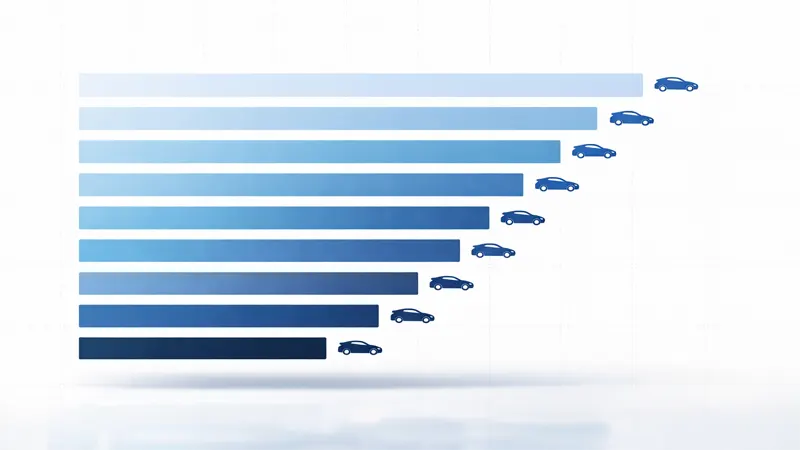
| Model | Est. Range | Fast Charge (10-80%) | Starting Price |
| Chevrolet Bolt | 255 mi | ~30 min | ~$29,995 |
| Nissan Leaf (2026) | 310 mi | ~35 min | ~$29,990 |
| Renault 5 E-Tech | 199 mi | ~30 min | ~£21,500 |
| Tesla Model Y LR | 327 mi | ~25 min | ~$44,990 |
| Hyundai Ioniq 5 | 282 mi | ~18 min | ~$35,000 |
| Kia EV6 | 310 mi | ~18 min | ~$42,600 |
| Skoda Elroq | 265 mi | ~28 min | ~£32,000 |
| Hyundai Ioniq 9 | 366 mi | ~24 min | ~$58,955 |
| Tesla Model 3 LR | 338 mi | ~25 min | ~$42,490 |
| Porsche Cayenne EV | ~320 mi | ~16 min | ~$90,000+ |
Note: Prices and range figures are estimates based on manufacturer data and real-world testing. Actual figures may vary by region, trim level, and driving conditions.
Charging Your Electric Car: What Every Buyer Should Know
Understanding how to charge your EV is just as important as choosing the right model. Here is a practical breakdown of the charging landscape in 2026.
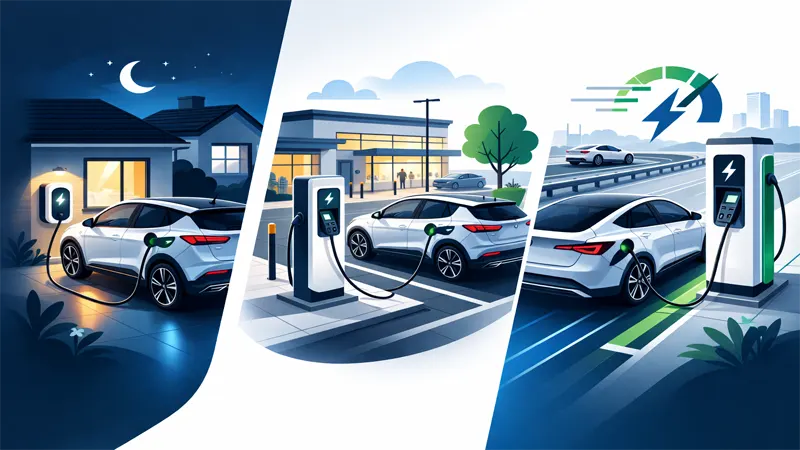
Home Charging: Your Daily Advantage
For most EV owners, home charging is the primary method of keeping their vehicle topped up. A Level 2 home charger, which can be installed for a few hundred dollars plus electrician fees, adds roughly 20 to 30 miles of range per hour. This means that for the vast majority of drivers whose daily commute is well under 100 miles, simply plugging in overnight ensures a full battery every morning. This convenience is something petrol and diesel vehicles simply cannot match.
Public Fast Charging: Road Trip Ready
The public charging network has expanded dramatically. In the UK alone, there are now over 86,000 public chargers, with numbers growing monthly. In the US, the network continues to expand rapidly with major investments in infrastructure. DC fast chargers, which are typically found along major routes near restaurants and shopping areas, can replenish 200 miles or more of range in approximately 20 to 30 minutes, making long-distance travel increasingly convenient.
Charging Tips for Apartment Dwellers
One of the most overlooked topics in EV guides is charging for those without a dedicated driveway or garage. Options are expanding: many workplaces now offer charging stations, public Level 2 chargers in car parks and shopping centres are increasingly common, and some apartment complexes are installing shared charging infrastructure. If you primarily rely on public charging, prioritise a vehicle with fast-charging capability to minimise the time spent at chargers.
800-Volt Architecture: The Game Changer
Several 2026 models feature 800-volt electrical systems, which enable significantly faster charging compared to the traditional 400-volt systems. Vehicles like the Hyundai Ioniq 5, Kia EV6, and Porsche Cayenne EV can achieve 10-to-80 percent charges in under 20 minutes at compatible stations. When shopping for an EV, look for 800-volt capability if fast charging is a priority for your driving lifestyle.
Real-World EV Ownership: Costs, Maintenance & What to Expect
Moving beyond the sticker price, understanding the total cost of EV ownership reveals where electric vehicles truly shine.
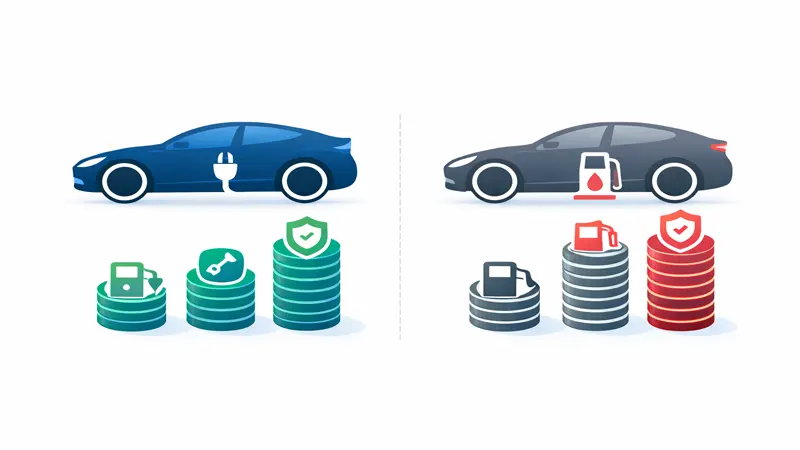
Fuel Savings
Electricity is significantly cheaper than petrol or diesel per mile driven. Depending on your local electricity rates and driving habits, switching to an EV can save hundreds to thousands of dollars or pounds per year on fuel costs alone. Home charging during off-peak hours amplifies these savings even further.
Maintenance Advantages
Electric vehicles have fewer moving parts than combustion engine vehicles. There is no engine oil to change, no timing belt to replace, no exhaust system to worry about, and brake pads last longer thanks to regenerative braking. Routine maintenance primarily involves tyre rotations, cabin air filter changes, and brake fluid checks, resulting in significantly lower ongoing costs.
Battery Longevity
Modern EV batteries are designed to last 12 to 15 years under typical use, with many exceeding 200,000 miles before any noticeable capacity reduction. Most manufacturers offer battery warranties of 8 years or 100,000 miles, providing peace of mind for new buyers. Battery degradation has proven to be far less severe than early critics predicted.
Resale Value Considerations
As the EV market matures, resale values are stabilising. Models from established brands with strong charging networks tend to hold their value best. The Tesla Model Y and Hyundai Ioniq 5, for example, have shown strong residual values. When choosing your EV, consider brand reputation, charging network access, and model popularity, as these factors directly influence how much your vehicle will be worth in three to five years.
Cold Weather Performance: What the Brochures Do Not Tell You
One area where many EV guides fall short is addressing cold-weather performance honestly. Battery range can decrease by 20 to 30 percent in cold temperatures, and this is a reality every prospective buyer in northern climates should understand.
However, modern thermal management systems have improved significantly. Features like heat pumps, which come standard on many 2026 models, help preserve range by efficiently heating the cabin without drawing excessive power from the main battery. Pre-conditioning your vehicle while it is still plugged in is another effective strategy, as it warms the battery and cabin using grid electricity rather than stored energy.
For drivers in cold climates, choosing an EV with a heat pump, a larger battery buffer, and good thermal management should be a priority. Models from Hyundai, Kia, and Tesla have consistently shown strong cold-weather performance relative to their peers.
EV Buyer Decision Framework: Which Electric Car Is Right for You?
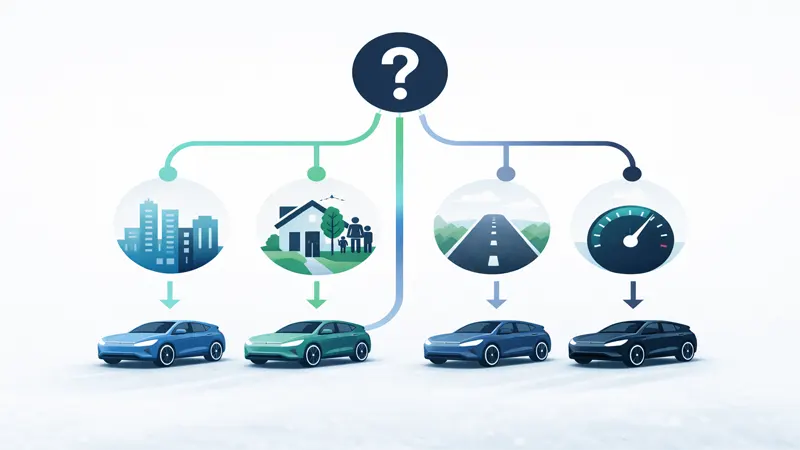
With so many options available, choosing the right EV can feel overwhelming. Use this framework to narrow your decision based on how you actually drive.

Urban Commuters (Under 40 Miles Daily)
If your daily driving is primarily city-based, a compact EV with 200 miles of range is more than sufficient. Models like the Renault 5, Fiat Grande Panda, or the returning Chevrolet Bolt offer excellent value for this use case. Prioritise features like parking sensors, compact dimensions, and energy efficiency over maximum range.
Suburban Families
Families need space, safety, and enough range for weekend activities. The Hyundai Ioniq 5, Skoda Elroq, and Tesla Model Y offer the right combination of interior room, cargo capacity, and 250-plus miles of range. Look for features like vehicle-to-load capability, which lets you power camping equipment or appliances from your car.
Long-Distance Drivers and Road Trippers
If you regularly drive more than 200 miles in a day, prioritise fast-charging capability and overall range. The Tesla Model 3 Long Range, Hyundai Ioniq 9, and Mercedes CLA EV are excellent choices. Look for 800-volt architecture and access to extensive fast-charging networks along your typical routes.
Performance Enthusiasts
For those who demand excitement behind the wheel, the Porsche Cayenne EV, Kia EV6 GT, BMW iX3, and the upcoming Porsche 718 EV deliver thrilling driving dynamics. Electric motors provide instant torque, making these vehicles faster off the line than almost any combustion-powered equivalent.
Budget-Conscious Buyers
If keeping costs down is the priority, the Chevrolet Bolt, Nissan Leaf, and used EVs from the past two to three model years offer the lowest barriers to entry. Factor in available tax credits and incentives, which can reduce the effective purchase price by several thousand dollars.
EV Incentives and Tax Credits in 2026
Government incentives continue to play a significant role in making EVs more affordable. The specifics vary by region, but here is a general overview of what is available.
United States
Federal tax credits of up to $7,500 remain available for qualifying EVs, though eligibility depends on factors including the vehicle’s final assembly location, battery component sourcing, and the buyer’s income. Many states offer additional rebates, reduced registration fees, and access to high-occupancy vehicle lanes. Always check both federal and state-level incentives before purchasing.
United Kingdom
While the UK plug-in car grant for private buyers has ended, significant benefits remain for company car drivers through favourable Benefit-in-Kind tax rates. From April 2026, the BiK rate for electric vehicles rises to 4 percent, still substantially lower than for petrol or diesel vehicles. Salary sacrifice schemes remain one of the most cost-effective ways to drive a new EV in the UK.
European Union
Incentives vary significantly across EU member states. Countries like Germany, France, and the Netherlands offer various combinations of purchase subsidies, tax exemptions, and reduced road charges for EV owners. Check your specific country’s current programmes, as these are frequently updated.
Frequently Asked Questions About Electric Cars in 2026
How far can electric cars go on a single charge in 2026?
Most new EVs in 2026 offer between 250 and 350 miles of real-world range, with premium models exceeding 400 miles. For the average driver covering under 40 miles daily, even entry-level models provide more than enough range for multiple days of driving on a single charge.
How long does it take to charge an electric car?
Charging time varies based on the charger type and vehicle capability. A Level 2 home charger adds 20 to 30 miles per hour, meaning an overnight charge fully replenishes most batteries. DC fast chargers can add 200 miles in as little as 15 to 30 minutes, depending on the vehicle and charger speed.
Are electric cars cheaper to run than petrol or diesel?
Yes, significantly. Electricity costs per mile are a fraction of petrol or diesel costs, and maintenance expenses are substantially lower due to fewer moving parts. Over a five-year ownership period, the total cost of running an EV is typically thousands of dollars or pounds less than an equivalent combustion vehicle.
Do electric car batteries degrade quickly?
Modern EV batteries are engineered to last 12 to 15 years, with many exceeding 200,000 miles before noticeable degradation. Most manufacturers provide 8-year or 100,000-mile battery warranties. Real-world data increasingly shows that battery longevity has exceeded initial expectations.
Can I charge an electric car if I live in an apartment?
Yes, though it requires more planning. Options include workplace charging, public Level 2 chargers at shopping centres and car parks, and fast-charging stations. Many apartment complexes are beginning to install shared charging points, and some municipalities are investing in curbside charging infrastructure.
What happens to EV batteries at end of life?
Spent EV batteries are increasingly recycled to recover valuable raw materials like lithium, cobalt, and nickel for use in new batteries. Many batteries also enjoy a second life in stationary energy storage applications before recycling. The EV battery recycling industry is growing rapidly, making electric vehicles more sustainable throughout their full lifecycle.
Final Verdict: The Best Time to Go Electric Is Now
The newest electric cars of 2026 represent a genuine turning point. Prices are falling, ranges are increasing, charging networks are maturing, and the variety of models ensures there is an EV for virtually every need and budget. Whether you choose an affordable city car, a versatile family SUV, or a high-performance grand tourer, the electric driving experience is better than it has ever been.
The key to a satisfying EV purchase is matching the vehicle to your actual driving habits rather than chasing the highest specs. Consider your daily commute, your access to charging, your family’s space requirements, and your budget, and you will find that the perfect electric car is already waiting for you.
Bookmark this page and check back regularly, as we continuously update this guide with the latest models, pricing changes, and real-world ownership insights to keep you informed throughout 2026 and beyond.