


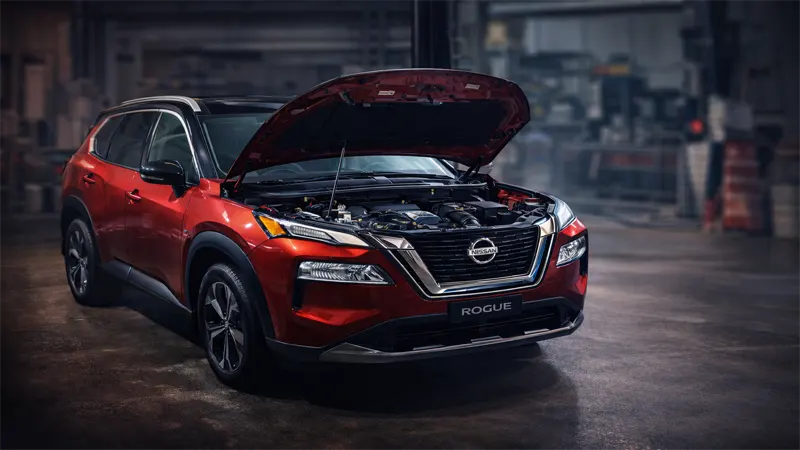

Nissan Recalls 643,000 Rogue SUVs in the US Over Engine & Gear Defects
Nissan has officially recalled approximately 643,000 Rogue compact SUVs across the United States following the discovery of two separate but equally serious powertrain defects. The National Highway Traffic Safety Administration (NHTSA) confirmed that the Japanese automaker is addressing a combination of engine bearing failures and electronic throttle body malfunctions that could lead to sudden power loss, stalling in traffic, and in worst-case scenarios, engine compartment fires.
This dual recall, spanning model years 2023 through 2025, ranks among the largest single-model safety actions in the SUV segment this year. If you own a Nissan Rogue equipped with the 1.5-liter variable-compression turbo (VC-Turbo) engine, here is everything you need to know about the affected vehicles, the specific risks involved, and the steps you should take right now.
What Triggered the Nissan Rogue Recall?
NHTSA’s investigation into the Nissan Rogue’s VC-Turbo powertrain has been ongoing since late 2023, prompted by a growing volume of owner complaints citing unusual engine knock, metal shavings found in oil pans, and intermittent throttle hesitation. The regulator’s findings ultimately pointed to two distinct manufacturing defects within the same engine platform, resulting in two parallel recall campaigns designated R25E2 and R25E3.
Notably, the engine bearing recall is not entirely new territory for Nissan. It expands upon a previous recall issued in June 2025 that covered more than 480,000 Rogue, Altima, and Infiniti vehicles for similar power-loss concerns tied to the VC-Turbo engine. That earlier action, tracked under NHTSA Campaign No. 25V-437, flagged manufacturing defects that could cause engine failure during normal driving conditions. The latest recall broadens the scope to include additional model year 2023–2025 Rogues that were not covered in the original action.
Recall #1: Engine Bearing Failure – 323,917 Vehicles
The first recall impacts 323,917 Nissan Rogue SUVs from model years 2023, 2024, and 2025, all equipped with the 3-cylinder 1.5L VC-Turbo engine. The core issue centers on the engine’s internal bearings, which can degrade prematurely due to manufacturing tolerance issues and material fatigue.
How the Defect Creates Danger
When the engine bearings fail, they can allow oil to overheat significantly beyond normal operating temperatures. Superheated oil loses its lubricating properties and begins acting as an abrasive rather than a protectant, accelerating internal component wear. This chain reaction can produce several hazardous outcomes:
- Hot oil discharge from the engine block, creating a direct fire risk in the engine compartment
- Sudden engine seizure while the vehicle is in motion, causing an immediate and complete loss of drive power
- Loss of power steering and brake assist if the engine stalls at highway speeds, making the vehicle significantly harder to control
- Visible smoke or burning smell from under the hood while driving
Nissan estimates that roughly 0.6% of vehicles covered under this recall will ultimately require a full engine replacement. For the remaining vehicles, the inspection process is expected to identify early signs of bearing wear before catastrophic failure occurs.
Recall #2: Throttle Body Gear Breakage – 318,781 Vehicles
The second recall covers 318,781 Rogue SUVs from model years 2024 and 2025, also powered by the same VC-Turbo engine platform. This defect involves the electronic throttle body assembly, a critical component within the engine’s air intake system that regulates engine output based on accelerator pedal input.
Understanding the Throttle Body Problem
The electronic throttle body uses a set of internal gears to translate driver input into precise air-fuel mixture adjustments. In affected Rogue models, these gears can fracture or wear down due to a design issue where the throttle plate repeatedly presses against its mechanical stop. Over time, this repetitive stress damages the gear teeth, leading to erratic or completely unresponsive throttle behavior.
When the throttle body fails, drivers may experience delayed acceleration response, sudden drops in engine power during highway driving, or the vehicle entering a reduced-power “limp mode” without warning. In traffic-heavy situations such as merging onto highways, crossing busy intersections, or overtaking slower vehicles, even a momentary loss of throttle response can create a serious collision risk.
Side-by-Side Recall Comparison
| Detail | Recall #1 (R25E2) | Recall #2 (R25E3) |
| Defect | Engine bearing failure | Throttle body gear breakage |
| Vehicles Affected | 323,917 units | 318,781 units |
| Model Years | 2023, 2024, 2025 | 2024, 2025 |
| Engine Type | 1.5L VC-Turbo (3-cyl) | 1.5L VC-Turbo (3-cyl) |
| Primary Risk | Hot oil leak, engine fire, power loss | Erratic throttle, sudden power drop |
| Remedy | Oil pan inspection; engine replacement if debris found | Software update; throttle body replacement if damaged |
| Owner Notification | March 27, 2026 | March 27, 2026 |
Warning Signs Every Rogue Owner Should Watch For
While not every affected vehicle will display symptoms before the scheduled repair, certain warning signs may indicate that the defects are actively progressing. Rogue owners should remain vigilant for the following indicators:
Engine Bearing-Related Symptoms
- Unusual knocking or tapping noises from the engine, especially during cold starts or under acceleration
- Metal shavings or metallic glitter visible in engine oil during routine oil changes
- Burning smell or visible smoke originating from under the hood
- Oil pressure warning light illuminating on the dashboard
- Sudden engine shutdown or stalling without prior warning
Throttle Body-Related Symptoms
- Noticeable lag or delay between pressing the accelerator and the vehicle responding
- Erratic or surging idle speed when the vehicle is stationary
- Check engine light or reduced power warning appearing on the instrument cluster
- Vehicle suddenly entering “limp mode,” restricting speed and acceleration
- Unintended deceleration during highway driving
If you experience any of these symptoms, it is strongly recommended that you avoid extended driving and contact your nearest Nissan dealership to schedule an inspection as soon as possible, even before receiving the official recall notification letter.
What Will Nissan Do to Fix the Problem?
Both recalls come with free-of-charge remedies performed at authorized Nissan dealerships. The repair approach differs depending on which defect applies to your vehicle:
For Engine Bearing Recall (R25E2)
Dealership technicians will drain and inspect the oil pan for metal debris, which serves as an early indicator of bearing degradation. If metal particles are detected, Nissan will replace the entire engine assembly at no cost to the owner. For vehicles showing no signs of contamination, a software update to the engine control module will be applied to improve real-time monitoring of oil temperature and bearing performance. This preventive reprogramming allows the vehicle’s onboard computer to detect abnormal behavior earlier and trigger protective measures before failure occurs.
For Throttle Body Recall (R25E3)
Technicians will apply a software update to the engine management system that prevents the throttle plate from repeatedly pressing against its internal stop, which is the root cause of gear wear. Additionally, dealerships will physically inspect the throttle body assembly for any existing damage. If gear fractures or excessive wear are already present, the entire throttle body unit will be replaced at no cost. In vehicles where no physical damage is found, the software update alone is expected to prevent the issue from developing in the future.
How to Check If Your Nissan Rogue Is Affected
Nissan has confirmed that official recall notification letters will be mailed to all registered owners of affected vehicles on March 27, 2026. However, you do not need to wait for that letter to determine whether your Rogue falls under either recall. Here are the steps you can take right now:
- Visit NHTSA’s recall lookup tool at gov/recalls and enter your 17-digit Vehicle Identification Number (VIN)
- Call Nissan’s customer support line at 1-800-647-7261 and provide your VIN to a representative
- Contact your local authorized Nissan dealership directly and request a VIN-specific recall status check
- Your VIN is located on the driver’s side dashboard (visible through the windshield), the driver’s door jamb sticker, and your vehicle registration documents
The VC-Turbo Engine: A Brief Reliability Timeline
Nissan’s 1.5-liter KR15DDT variable-compression turbo engine was designed as a groundbreaking piece of technology when it debuted in the 2019 Infiniti QX50. The VC-Turbo platform uses an innovative multi-link mechanism that allows the engine to dynamically adjust its compression ratio during operation, theoretically offering the performance of a turbocharged engine combined with the fuel efficiency of a smaller displacement unit.
However, the technology’s real-world reliability has been a persistent concern. The complex internal mechanisms that enable variable compression introduce additional moving parts and tighter manufacturing tolerances than conventional engines. Owner complaints about engine noise, premature oil consumption, and intermittent power loss began surfacing within the first few years of production, eventually prompting NHTSA to open a formal investigation in December 2023.
The June 2025 recall covering 480,000+ vehicles was the first major regulatory action, and this latest 643,000-unit recall further underscores the ongoing challenges Nissan faces in delivering consistent quality with this engine platform. For prospective buyers and current owners, it highlights the importance of staying current with all recall actions and maintaining diligent service schedules.
Your Rights as a Recall-Affected Vehicle Owner
Federal law requires that all safety recall repairs be performed entirely free of charge, regardless of your vehicle’s mileage or whether you purchased it new or used. If you have already paid for repairs related to either of these defects before the recall was announced, you may be entitled to reimbursement from Nissan. Keep all receipts and repair documentation and contact Nissan’s customer service team to initiate a reimbursement claim. Check out more about this store at https://shazcars.com/news/nissan-recalls-643000-rogue-suvs/.
Additionally, if a dealership attempts to charge you for recall-related work, or if you experience difficulty scheduling a timely repair appointment, you can file a complaint directly with NHTSA through their website or by calling their Vehicle Safety Hotline at 1-888-327-4236.
How This Recall May Impact Rogue Resale Values
Large-scale recalls of this nature inevitably raise questions about long-term vehicle values. Industry analysts suggest that the Rogue could experience short-term depreciation pressure of 3 to 7 percent as the market absorbs the recall news. However, historical data from similar large-scale recalls shows that vehicles tend to recover their value within 12 to 18 months once the recall repairs are completed and no further issues emerge.
For owners who are planning to sell or trade in their Rogue, it is advisable to complete the recall repair before listing the vehicle. A completed recall on the vehicle’s service record demonstrates proactive maintenance and can actually strengthen buyer confidence compared to an open, unaddressed recall.
What Should Rogue Owners Do Right Now?
If you own a 2023, 2024, or 2025 Nissan Rogue with the VC-Turbo engine, taking prompt action is the single most important thing you can do to protect yourself and your passengers. Here is a practical checklist:
- Check your recall status immediately using your VIN at nhtsa.gov/recalls or by calling 1-800-647-7261
- Schedule a dealership appointment early – with over 643,000 vehicles affected, service capacity may be stretched. Booking sooner means shorter wait times
- Monitor for warning signs including engine knocking, throttle lag, dashboard warning lights, and unusual smells from the engine bay
- Avoid long-distance travel if your vehicle is exhibiting any symptoms until the recall repair has been completed
- Keep your documentation – save all repair receipts, dealer communications, and the recall notification letter once it arrives
- Confirm repair completion – after the service visit, verify that the recall status shows as “closed” in Nissan’s system and retain the repair order for your records
Final Thoughts
The recall of 643,000 Nissan Rogue SUVs is a significant safety action, but it is also an important reminder that the recall process exists specifically to catch and correct defects before they result in accidents or injuries. Nissan’s commitment to inspecting and repairing every affected vehicle at no cost to owners is exactly how the system is designed to work.
For Rogue owners, the key takeaway is straightforward: do not delay. Check your VIN, schedule your appointment, and get the repair done. With both engine fire risk and sudden power loss on the table, this is not a recall to put off until it is convenient. The repair is free, the process is established, and your safety is worth the trip to the dealership.
Frequently Asked Questions (FAQs)
Q1: Which Nissan Rogue model years are affected by this recall?
The engine bearing recall (R25E2) covers 2023–2025 Rogue models, while the throttle body recall (R25E3) affects 2024–2025 Rogues. Both apply exclusively to vehicles equipped with the 1.5L VC-Turbo engine.
Q2: Will I have to pay for the recall repair?
No. All recall repairs, including parts, labor, software updates, and engine replacements where necessary, are performed completely free of charge at authorized Nissan dealerships.
Q3: When will Nissan send the official recall notice?
Nissan has confirmed that notification letters will be mailed to all affected vehicle owners on March 27, 2026. However, you can check your recall status immediately using your VIN at nhtsa.gov/recalls.
Q4: Is it safe to drive my Rogue before the recall repair?
If your vehicle is not exhibiting any symptoms such as engine knocking, throttle hesitation, or warning lights, it is generally considered safe for routine driving. However, if any symptoms are present, avoid unnecessary trips and schedule a dealership inspection immediately.
Q5: I already paid for repairs related to these issues. Can I get reimbursed?
Yes. If you incurred out-of-pocket costs for repairs directly related to either the engine bearing or throttle body defect before the recall was announced, contact Nissan’s customer service at 1-800-647-7261 with your repair receipts to request reimbursement.
Q6: Does this recall affect any other Nissan models?
This specific recall action applies only to the Nissan Rogue. However, the earlier June 2025 recall for similar VC-Turbo engine issues also covered certain Altima sedans and Infiniti models. Owners of those vehicles should verify their recall status separately.
